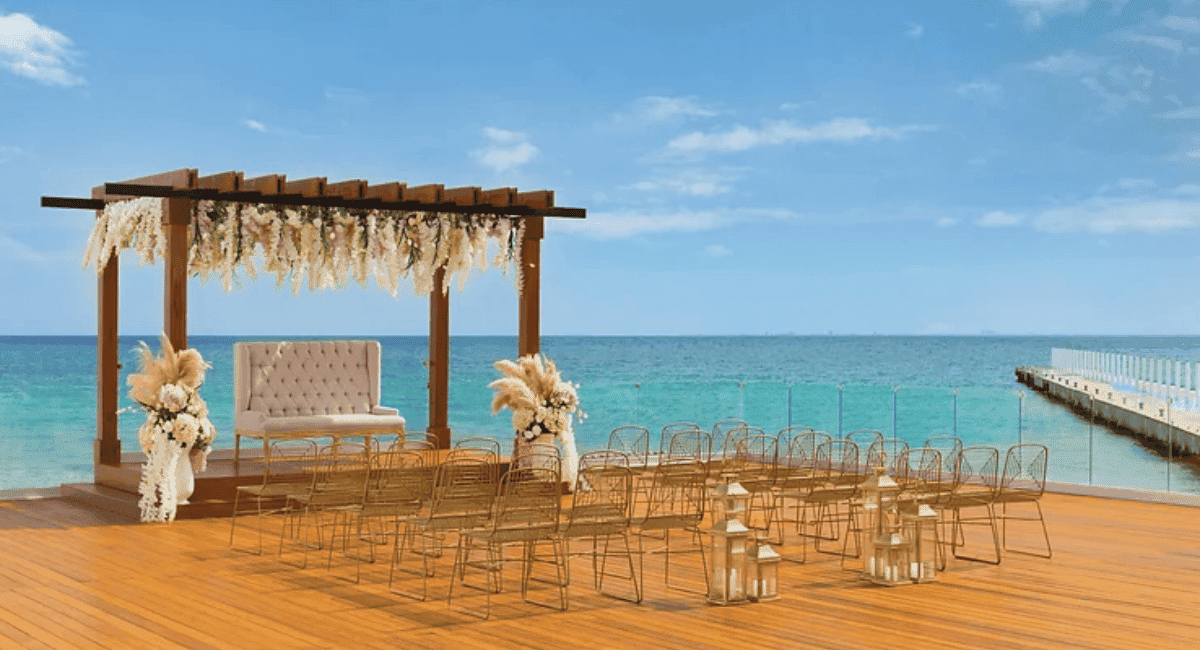

A destination wedding involves much more than selecting a beautiful venue. Successful destination wedding planning includes:
- Choosing the right destination and resort
- Coordinating wedding vendors
- Managing guest accommodations and room blocks
- Organizing transportation and airport transfers
- Creating wedding day timelines
- Handling travel logistics for guests
- Preparing contingency plans for weather or travel disruptions
A destination wedding planner and travel advisor help coordinate these moving pieces so couples can focus on celebrating rather than managing logistics.
What Is the Difference Between a Destination Wedding Planner and a Travel Advisor?
A destination wedding planner focuses on the wedding itself, including:
* Ceremony planning
* Reception details
* Vendor coordination
* Décor and floral selections
* Wedding-day timelines
A destination wedding travel advisor focuses on guest travel and accommodations, including:
* Resort recommendations
* Room block management
* Guest reservations
* Airport transfers
* Travel requirements
* Group communication
* Honeymoon planning
When both work together, couples receive support for both the wedding event and the travel experience.
The Destination Wedding Planning Process Step by Step
Most destination weddings follow a similar planning timeline:
1. Choose Your Destination and Venue
Select a destination that matches your vision, budget, and guest travel needs. Popular destination wedding locations include Mexico, Jamaica, the Dominican Republic, St. Lucia, Costa Rica, and the Caribbean.
2. Establish a Budget
Determine how much you want to invest in the wedding, travel, accommodations, and guest events.
3. Reserve Room Blocks
Room blocks ensure guests stay together and often provide group benefits and pricing.
4. Confirm Vendors
Secure photography, videography, entertainment, florals, officiants, and décor vendors.
5. Coordinate Guest Travel
Provide guests with booking assistance, travel requirements, airport transfer details, and accommodation information.
6. Finalize Event Timelines
Create schedules for welcome parties, ceremonies, receptions, excursions, and departures.
7. Prepare for Arrival
Confirm final guest counts, transportation schedules, and contingency plans before everyone travels.
How Do You Personalize a Destination Wedding?
No two couples want the same day. You might want every hour of your wedding weekend thoughtfully accounted for, or you might want the structure to disappear entirely so the celebration feels like one long, happy gathering. Either way, your planner builds around how you actually want to celebrate, not a template someone else used before you.
How Are Destination Wedding Logistics Coordinated?
For most destination weddings, responsibilities are shared between the wedding coordinator and the travel advisor.
The wedding coordinator typically manages:
- Ceremony and reception planning
- Vendor communication
- Event timelines
- Décor and setup
- Wedding-day execution
Meanwhile, Journeys helps coordinate:
- Guest accommodations
- Room blocks
- Travel reservations
- Airport transfers
- Group communication
- Honeymoon arrangements
This collaborative approach ensures both the wedding experience and guest travel logistics run smoothly.
Why Do Established Destination Relationships Matter?
When you’re planning a wedding away from home, having experienced professionals who know the destination can make the process much smoother. Established relationships with resorts and travel partners often mean faster communication, better coordination, and a clearer understanding of how each property operates.
Instead of spending hours researching accommodations, policies, and group requirements, couples benefit from guidance based on firsthand experience and established industry connections. When questions arise about room blocks, guest accommodations, transfers, or resort logistics, having the right contacts can help resolve issues more efficiently and keep planning on track.
What Happens If Something Goes Wrong at a Destination Wedding?
Weather changes. A vendor cancels. Someone’s flight is delayed, and they’re arriving the morning of the ceremony. These things happen.
The difference is having someone already working on solutions before you even know there’s a problem, rather than navigating it yourself in a foreign country, possibly in a different time zone. The day feels easy. Even if the days leading up to it weren’t.
Planning Your Destination Wedding? Start with the Right Team.
A great wedding day takes more than a beautiful venue. It takes the right people in your corner, from the planner coordinating every moving part to the travel advisor making sure your guests arrive without stress. Journeys specializes in destination wedding travel, handling hotel blocks, transfers, honeymoon planning, and all the logistics that keep your group together and on time.
Ready to start planning? Get in touch with Journeys today, and let’s build your destination wedding from the ground up.
Frequently Asked Questions on Booking a Destination Wedding
How far in advance should I start planning a destination wedding?
Most couples should begin planning a destination wedding 12 to 18 months before their preferred wedding date. Popular resorts and wedding venues often book a year or more in advance, especially during peak travel seasons. Starting early gives you the best selection of venues, accommodations, and travel options for your guests.
Do I need a local planner at the destination?
Not always. Many resorts include an on-site wedding coordinator who manages ceremony and reception details. Depending on the destination and complexity of your event, you may also choose to work with an independent wedding planner for additional support. Your wedding planning team can help determine what level of coordination is best for your celebration.
How do I help guests with travel arrangements?
The easiest way is to work with a destination wedding travel advisor who can assist guests with accommodations, room blocks, travel requirements, airport transfers, and questions throughout the planning process. A wedding website with travel information, resort details, and destination tips can also help guests feel prepared before departure.
What if a key wedding vendor cancels before the wedding?
Most resorts and wedding planners have contingency plans and trusted local vendor networks in place to address unexpected changes. If a vendor becomes unavailable, the wedding coordinator typically works to secure a suitable replacement while minimizing disruptions to the event.
Is a destination wedding more expensive than a traditional wedding?
Not necessarily. The total cost of a destination wedding depends on the destination, guest count, travel requirements, and overall wedding vision. Many couples find that a smaller guest list helps balance costs, while others choose to invest more in an extended wedding weekend experience.
What is the difference between a destination wedding planner and a travel advisor?
A destination wedding planner focuses on the wedding itself, including the ceremony, reception, vendors, décor, and event timeline. A destination wedding travel advisor manages guest accommodations, room blocks, transportation, travel logistics, and honeymoon planning. Together, they help create a seamless wedding experience for both the couple and their guests.